














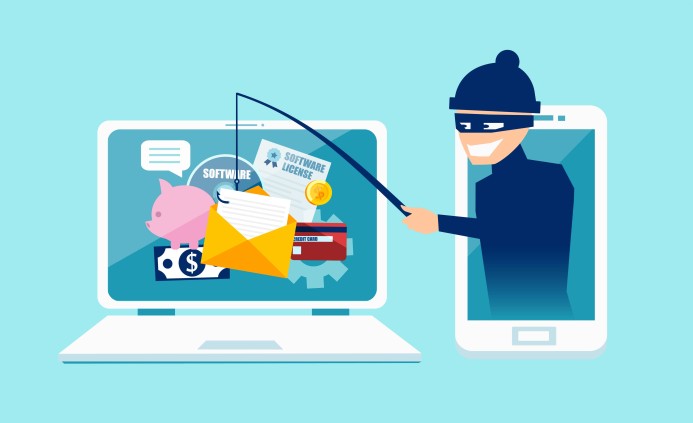




Adaptive AI learns how your organization talks and stops the email that does not fit.
Adaptive AI builds a baseline for every mailbox, checks each message against models trained on 12 years of attacks, and removes what it catches. Our AI agents build on what Adaptive AI learns.
Adaptive AI makes each call in three steps.
Every step happens inside the inbox, on every message, at the automation level you set.
It learns what normal looks like.
NLP and NLU map who talks to whom and how, and build a baseline and social graph for every user.
It checks every message.
Behavioral and semantic models work with Sender Relationship Analysis, Entity and Keyword Reputation and Computer Vision.
It acts within your thresholds.
Themis groups related messages into one incident and quarantines, escalates or resolves it at the automation level you set.
36,000+ security professionals help train Adaptive AI every day.
Analyst decisions across 18,000+ organizations flow back into the models, and you can see how peers resolved ambiguous incidents. Every verdict draws on 12 years of intercepted attacks.
“It takes a lot of the manpower out of our hands… The fact that it removes malicious emails directly from the inboxes just shows the power behind it.”
 James BarnesInfrastructure Team Leader, Ayrshire College

Adaptive AI hands the agents what it learns.

Your Red Teaming Agent builds the attacks aimed at you and teaches your defenses to recognize them. Red Teaming Agent

When an incident needs a deeper look, your Phishing SOC Agent starts from Adaptive AI's findings and works it to a verdict. Phishing SOC Agent

Your Phishing Simulation Agent trains the people those attacks would target, on the spot when they click. Phishing Simulation Agent
Questions security teams ask about Adaptive AI.
What is AI email security?
AI email security uses machine learning to judge each message by how your organization normally communicates, instead of relying only on fixed rules and known-bad lists. The Ironscales engine, Adaptive AI, uses natural language processing (NLP) and natural language understanding (NLU) to learn how every mailbox communicates. It checks each message against models trained on 12 years of attacks across all of our customers and removes what it catches.
How does Adaptive AI catch BEC and spear phishing?
These attacks often carry no malicious link or file, so Adaptive AI looks at behavior. It maps who talks to whom and how, then flags a message that breaks the pattern, such as a first-time payment change from a vendor contact. Sender Relationship Analysis and Entity and Keyword Reputation supply those signals.
Can AI-written phishing get past AI email security?
Wording is a weak signal when AI writes the lure. Adaptive AI also weighs who is writing, whether that sender has written to this person before and whether the request fits the relationship, and polished wording does not change those signals.
What trains the Adaptive AI models?
Analyst decisions from 36,000+ security professionals across 18,000+ organizations flow back into the models, on top of 12 years of intercepted attacks. What one organization reports, everyone is protected from.
How do the AI agents use what Adaptive AI learns?
Each agent builds on Adaptive AI. The Phishing SOC Agent starts an investigation from Adaptive AI's findings, the Red Teaming Agent teaches your defenses to recognize the attacks it builds, and the Phishing Simulation Agent trains the people those attacks would target.
Does Adaptive AI handle spam and graymail too?
Yes. Adaptive AI sorts spam and graymail, such as newsletters and promotions, alongside phishing, BEC and malware, and it adapts to each person. When one employee marks a message as wanted, Adaptive AI learns that preference for them, and the same message stays spam or graymail for everyone else.