.png?width=50&height=50&name=Untitled%20-%20July%2030%2c%202026%20at%2014.53.38%20(3).png)








/Misc%20Icons/icon-red-teaming-agent-gradient-simple.svg)
/Misc%20Icons/icon-phishing-soc-agent-gradient-simple.webp?width=158&height=167&name=icon-phishing-soc-agent-gradient-simple.webp)
/Misc%20Icons/icon-phishing-simulation-agent-gradient-simple.svg)


/Misc%20Icons/icon-nav-encryption.svg)


/Blue%20Feature%20Flower%20Icons/gear%20head%20icon.svg)
/Misc%20Icons/icon-nav-credential-theft.svg)












Over the past three months, I’ve written about outbound email from three different angles. First, the compliance cliff: the widening gap between what regulators expect of sensitive data in transit and what most security stacks actually deliver. Then, what architectural encryption should look like when you design it for a regulatory environment that changes by the quarter. And most recently, what opens up for MSPs when encryption finally stops fighting the multitenant business model.
Each of those pieces ended with roughly the same conclusion. Sensitive data leaving an organization is a real problem. The tools that have historically been used to solve it create their own problems. The solution requires rethinking the architecture rather than adding more infrastructure.
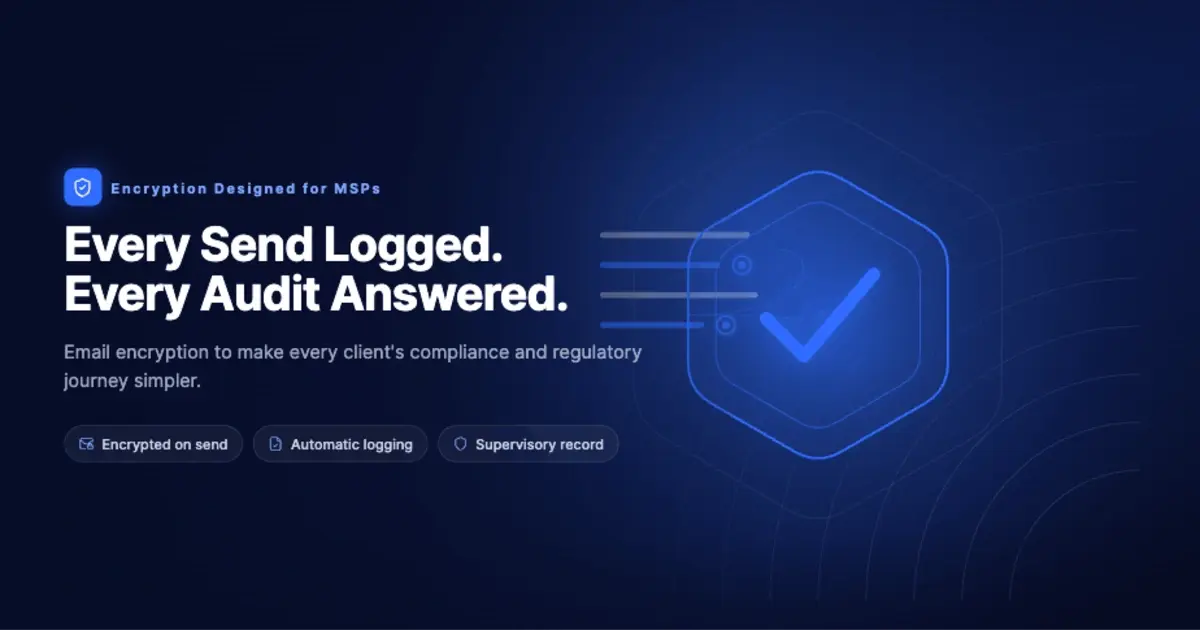
This is the piece that closes the loop. IRONSCALES Email Encryption, including Policy-Based Encryption and outbound data protection, is fully live and available. It’s included in select plans and available as a paid add-on for everyone else, which puts the capability we’ve been building the case for within reach of any organization on the platform.
So rather than restate the argument, let me show you what’s running in production. It comes down to three commitments we made when we designed this, and each one exists as a direct answer to a failure mode we’ve all watched play out.
Encryption That Doesn’t Depend on Anyone Remembering
Every outbound data exposure shares the same root cause: a person, moving fast, doing their job. The billing coordinator sending a patient statement. The account manager attaching the wrong spreadsheet. Nobody was careless in a way training could have fixed. They were just busy.
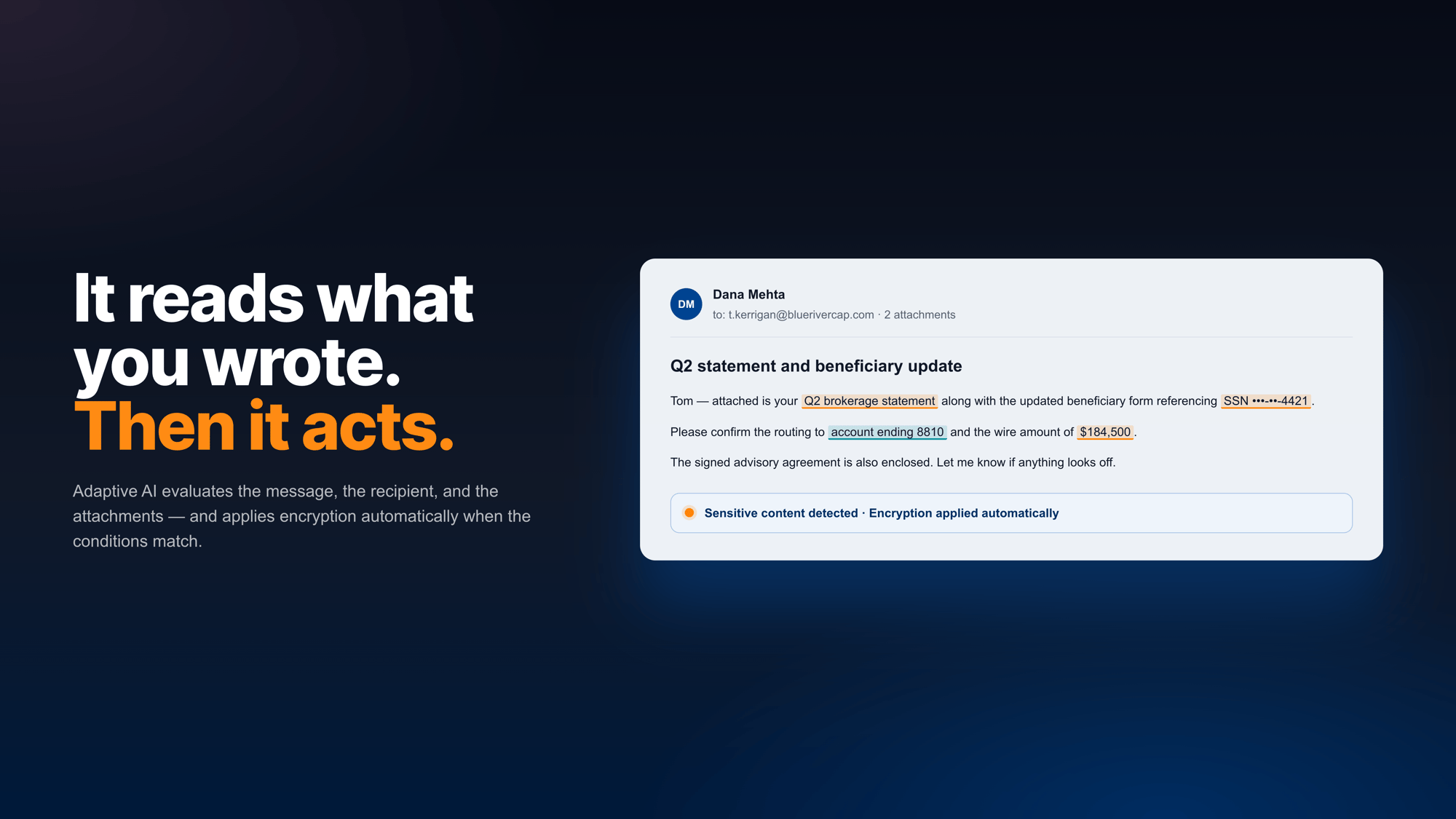
That’s why Policy-Based Encryption is the foundation of this release rather than the add-on. Adaptive AI inspects outbound messages and attachments for sensitive content, whether that’s cardholder data, PHI, financial records, or the PII patterns your policies define, and encrypts automatically the moment a policy matches, without the sender having to remember or even notice.
Elective Encryption sits alongside it for the workflows your users know better than any policy engine will. An Outlook add-in or a [secure] keyword in the subject line gives senders direct control when they know a message needs protection. Most organizations will run both, with policy as the safety net underneath user judgment.
For enterprises, this closes the gap between a written data-handling policy and enforcement of that policy. For MSPs, it’s the same principle applied across a book of clients: reusable policy templates for healthcare, financial services, education, and insurance mean you define the posture once and push it everywhere it fits.
Compliance Adherence You Can Prove
Here’s a question worth sitting with: when your auditor, examiner, or cyber insurer asks how sensitive data is protected in transit, is your answer a control or a hope?
“We have a policy” is a hope. “Encryption fires automatically when regulated content is detected, and here is the log” is a control. The distance between those two answers is where fines, failed audits, and rejected insurance claims (or saved money in premiums) live.
IRONSCALES Email Encryption was built to keep you on the right side of that distance. Policy enforcement is repeatable and auditable, with reporting that produces the evidence trail HIPAA, PCI DSS, FERPA, GDPR, and the growing patchwork of state privacy laws increasingly require. When the question comes, and it’s coming earlier in more client conversations every year, the answer is documentation, not a scramble.
There’s an operational point buried in here too. Compliance evidence that generates itself is compliance evidence your team doesn’t hand-build under a deadline. Enterprises get audit readiness without a quarterly fire drill. MSPs get renewal conversations where the encryption question is an asset instead of an open item.
The Recipient Experience Is the Product
Most legacy encryption failed at the last step. The message was encrypted, the compliance box was checked, and then the recipient hit a portal demanding account creation, a new password, and an authentication flow indistinguishable from the phishing attacks we spend the rest of our careers warning people about. So the message sat unopened, secure and useless in equal measure.
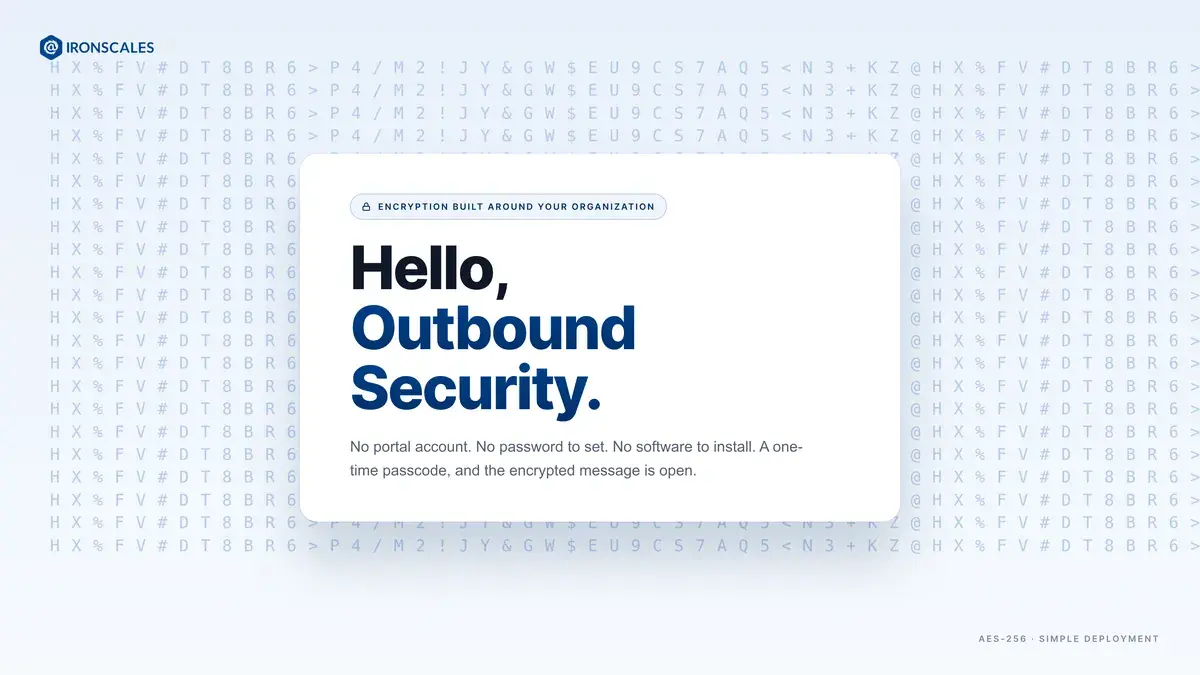
We designed our recipient experience around one assumption: the person on the other end may encounter encrypted email once a year. They get a notification with a secure link. They authenticate with a one-time passcode delivered to their inbox. No account. No password to set, forget, and reset. No software to install. Reply and reply-all work through the secure portal, so the conversation continues instead of dying at the point of delivery.
If you run an enterprise, that means the patients, clients, and partners you communicate with actually read what you send. If you run an MSP, it means something more specific: fewer help-desk tickets, because the number one driver of encryption-related support calls was never the encryption. It was the portal.
One Platform, Both Directions
A closing thought I'd like to leave you with. Email Encryption isn’t a bolt-on with its own console and its own vendor relationship. It lives inside the same IRONSCALES platform already handling inbound threat detection, account takeover protection, DMARC management, phishing simulation testing, and SAT. Inbound and outbound, one console, one place to show an auditor that email security covers the full surface.
Three blog posts ago, I opened with the question, "what happens when we send something we shouldn’t?" IRONSCALES now provides an answer to that questions for all our customers and partners. Sensitive content gets detected, encryption automatically fires by policy, the recipient opens the message without friction, and the record proves all of it happened.
Request a demo, or talk to your IRONSCALES representative about adding Email Encryption to your plan, and see how quickly outbound protection can be running in your environment, whether that’s one organization or an entire client portfolio.
Explore More Articles
Say goodbye to Phishing, BEC, and QR code attacks. Our Adaptive AI automatically learns and evolves to keep your employees safe from email attacks.
/Leadership%20Headshots/Audian%20Paxson%20Headshot%201000x1000%20032026.webp?width=100&height=100&name=Audian%20Paxson%20Headshot%201000x1000%20032026.webp)